Who's liable if a deck railing fails? Guardrail codes and safety liability in Charlotte
By Rod Burnett · Updated 2026-06-30
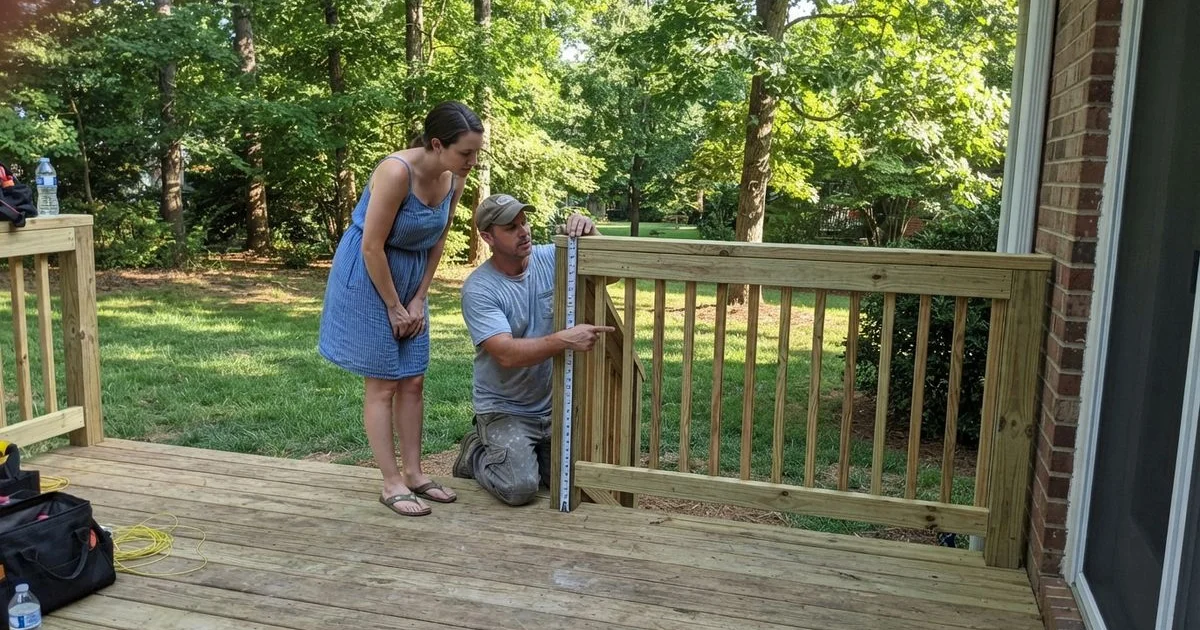
An elevated deck failure is rare, but when it happens, it’s usually serious, which is why the liability question is worth understanding before you build rather than after something goes wrong. This is general information about how these situations typically play out, not legal advice for a specific circumstance.
Two different kinds of liability
Building on the multi-level and elevated decks work in this directory, it helps to separate two liability questions that often get blurred together. The first is premises liability: as a homeowner, you’re generally responsible for keeping your property reasonably safe for guests, and homeowners liability insurance is what typically responds if someone is hurt on your deck. The second is construction liability: if a failure traces back to a design flaw, a code violation, or a botched installation, the builder’s own general liability insurance may be the party that responds instead, at least during the period their work is covered. The construction quality that prevents that kind of failure starts well before the railing goes up; the elevated and multi-level deck building process guide covers what a code-compliant build looks like from footings to final railing installation.
Where the line usually falls
In practice, the distinction often comes down to cause. A railing that fails because it was never built to code, undersized posts, wrong baluster spacing, missing structural connectors, points toward the builder. A railing that fails after years of unaddressed rot or a homeowner skipping obvious maintenance points more toward the homeowner’s own responsibility. Real situations are rarely this clean, which is part of why documentation, permits, inspection records, and a written contract, matters if a dispute ever needs to be sorted out.
The code basics that reduce risk
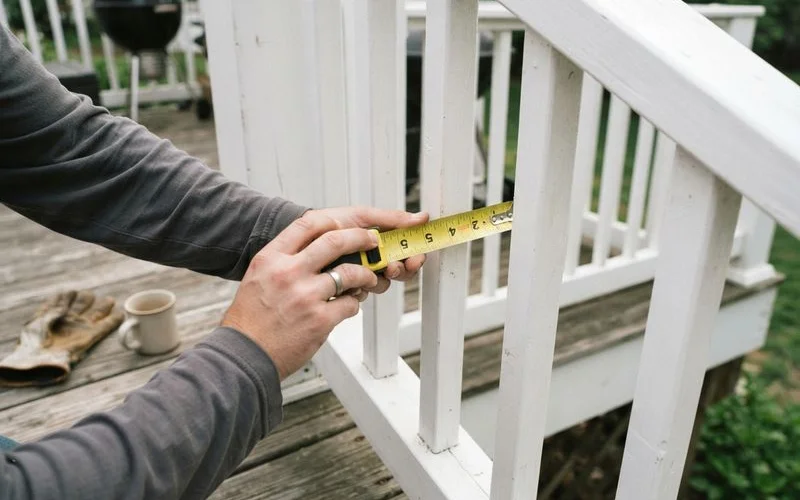
Building codes in the Charlotte area generally require guardrails between 36 and 42 inches high, depending on how far the deck sits above grade, with baluster spacing close enough that a child can’t pass through. These aren’t arbitrary numbers. They come from decades of injury data on falls and entrapment, and a builder who treats them as a minimum rather than a suggestion is doing you a real favor.
| Liability factor | Who it typically points toward |
|---|---|
| Failure from a code violation or construction defect | Builder |
| Failure from years of unaddressed rot or neglect | Homeowner |
| Injury from a guest on a code-compliant, maintained deck | Homeowner’s liability insurance, as with any property injury |
| Dispute over whether work met code when built | Permit and inspection records matter most here |
Why permits help more than they seem to
A permitted, inspected deck creates a paper trail showing it met code at the time it was built. That record matters if a failure happens years later and it’s unclear whether the cause was an original construction issue or something that developed afterward. An unpermitted deck has no such record, which can make any dispute, insurance or otherwise, harder to resolve in your favor.
If you’re buying a home with an older deck
An existing deck that predates current code isn’t automatically a liability problem, but it’s worth a closer look before you close on a home. Older railings sometimes fall short of today’s spacing or height standards, especially on decks built before recent code updates. A home inspection should flag obvious issues, but it’s reasonable to ask a deck contractor for a separate structural look if the deck is elevated, older, or shows any visible wear. Bringing a railing up to current code is usually a modest repair, far cheaper than dealing with a failure later.
Rental and multi-family situations
If you rent out a property with an elevated deck, the liability picture adds a landlord layer on top of the usual homeowner considerations. Landlords generally carry a heightened duty to keep shared or rented structures safe, and a tenant-reported issue with a railing or step is worth addressing quickly rather than waiting for a lease renewal or scheduled maintenance visit. A landlord-specific insurance policy, rather than a standard homeowners policy, is usually the right coverage for a rented property, and it’s worth confirming that a deck or porch is explicitly covered.
What homeowners can do
Ask your builder about their liability insurance and any workmanship warranty before signing, and keep a copy of the permit and inspection approvals once the project wraps up. Periodically check railings, especially on an older elevated deck, for loose connections, soft wood, or rust on fasteners, since catching a problem early keeps it a maintenance issue rather than a liability one. Our methodology explains how we factor licensing and insurance into how builders are scored, and you can browse Charlotte Deck Builder Guide to compare builders with a track record of code-compliant work.
FAQ
- Who's liable if a guest is hurt on my deck?
- As the homeowner, you generally carry premises liability for guests injured on your property, which is why homeowners liability insurance matters. If the injury traces back to a construction defect rather than neglect, the builder's own liability insurance may also come into play.
- What height does a deck guardrail need to be?
- Building codes in the Charlotte area generally require guardrails between 36 and 42 inches depending on how high the deck sits above grade, with baluster spacing tight enough to prevent a child from passing through.
- Does a permit reduce my liability risk?
- It helps. A permitted, inspected deck has a documented record showing it met code at the time it was built, which matters if a dispute ever comes up later about whether a failure was a construction defect or a maintenance issue.
- Is this legal advice?
- No. This is general information about how liability typically works for residential deck structures. Talk to an attorney for guidance on a specific situation.