Deck rot and mold: warning signs your deck needs repair, not just a new coat of stain
By Rod Burnett · Updated 2026-07-03
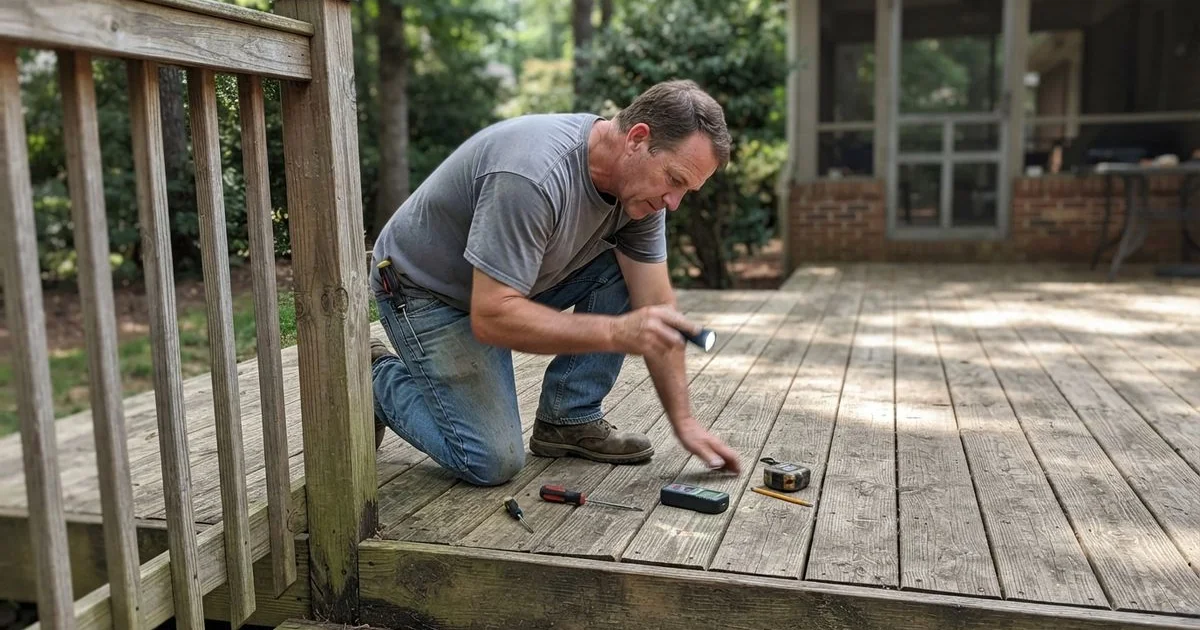
Charlotte’s humid summers and freeze-thaw winters are hard on any deck, and the line between “needs a fresh coat of stain” and “needs real repair” isn’t always obvious from a quick look. A deck repair and refinishing contractor sees this distinction every day, and knowing the difference before you call one saves you from either ignoring a real problem or paying for work you don’t need. This is general information to help you spot the difference, not a substitute for a licensed inspection if you’re unsure.
Signs it’s just cosmetic
Grayed, faded wood with old stain wearing thin is the most common thing homeowners notice, and in most cases it’s purely cosmetic. If the boards still feel solid and firm when you walk on them and press down at the edges, cleaning and restaining usually restores both the look and the protection. Surface mildew on shaded boards, without softness underneath, also typically cleans off rather than signaling deeper damage.
Signs that mean more than a new coat of stain
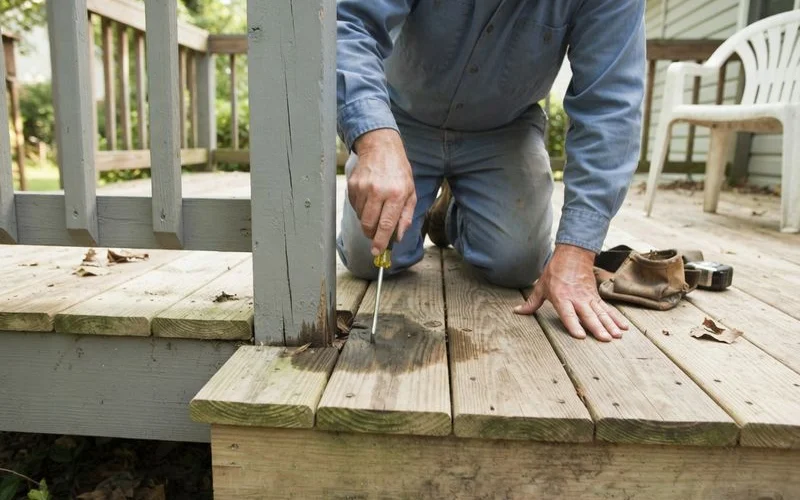
- Soft or spongy boards. Press a screwdriver into a suspect board. If it sinks in easily, the wood is rotting from the inside, and refinishing won’t help.
- Visible mold or dark staining in shaded, damp spots. Especially common underneath a deck or around post bases where moisture lingers longer.
- Loose or wobbly railings. Usually a sign a post connection has failed or rotted at its base. Treat this as a safety issue and keep people off that section until it’s checked.
- Gaps or separation where the deck meets the house. This points to a ledger board or flashing problem, one of the most common places deck failures start, since water intrusion here isn’t always visible from the surface.
- Rust streaks around fasteners. Popped or corroded fasteners can mean the framing underneath has moved or the connection has weakened.
Why the ledger board matters so much
The ledger board, the horizontal board that bolts the deck to your house, carries a large share of the deck’s structural load, and it’s also the spot most exposed to water if flashing wasn’t installed correctly during the original build. Some homeowners in this area have found rot showing up here within just a few years when the original installation skipped proper flashing, well before the rest of the deck shows any wear. This is one reason it’s worth having a contractor check the ledger connection specifically, not just the visible boards, during any repair estimate.
| What you see | Likely cause | What to do |
|---|---|---|
| Gray, faded wood, firm underfoot | Worn finish | Clean and restain |
| Soft or spongy boards | Wood rot | Board replacement, check nearby framing |
| Loose railing or post | Failed connection or rotted post base | Stop using that section, call a contractor |
| Gap or staining at the house connection | Ledger board or flashing issue | Structural inspection needed |
| Rust around fasteners | Corroded or loosened hardware | Fastener replacement, check surrounding wood |
Sun exposure changes what to watch for
A deck in full sun tends to show finish wear faster, graying and fading sooner, but often stays drier and resists rot longer since it isn’t holding onto moisture. A shaded deck can look fine on the surface for years while quietly staying damp underneath, which is exactly the condition rot and mold need. If your deck sits under trees or against the north side of the house, don’t rely on how the finish looks as your main signal. Check the boards directly, especially near post bases and anywhere leaves or debris tend to collect, since that’s where a shaded deck’s problems usually start first.
When to call a pro right away
Any movement in the railing, visible separation at the ledger board, or a soft spot near a support post is worth a call before you use that part of the deck again. A qualified contractor will check ledger board attachment, footings, and joist spacing as part of a real inspection, not just the surface boards, and can tell you honestly whether you’re looking at a repair or something bigger.
Staying ahead of it
A yearly walk-around, checking for soft spots, loose fasteners, and standing water after rain, catches most problems while they’re still small and inexpensive to fix. Our methodology explains how we score deck repair contractors on responsiveness and consistency, and you can browse Charlotte Deck Builder Guide to find a repair specialist before a small issue becomes a bigger one.
FAQ
- How do I know if my deck just needs restaining or something more?
- Grayed wood and faded stain with a solid, firm feel underfoot usually just needs cleaning and a fresh coat. Soft, spongy boards, visible mold in shaded spots, or movement in the railing point to rot or structural issues that refinishing won't fix.
- Where does deck rot usually start?
- Most commonly at the ledger board where the deck attaches to the house, since that's where water tends to collect if the flashing wasn't installed correctly. Post bases and any spot where boards trap leaves or standing water are close behind.
- Is a wobbly railing a serious problem?
- Yes, treat it as one. A loose railing usually means a connection has failed or a post has rotted at the base, and it's a safety issue, not just a cosmetic one, especially on an elevated deck.
- Can I just sand and reseal a deck with rot on a few boards?
- Isolated rotten boards can often be replaced individually as part of a repair, but sealing over a rotted board doesn't fix it. The affected wood needs to come out, and it's worth having a contractor check nearby framing while they're at it.